
The Woman Behind the Nature Center
Updated: Jun 11

By Eric Ross
Effie Yeaw Nature Center is named in honor of a woman who lived her spiritual values, taught ecology to schoolchildren when few had heard the word, and advocated persistently for nature, outdoor education, and the safeguarding of Sacramento’s heritage oaks. Moreover, she founded, organized and helped build effective and lasting local organizations to conserve and protect our Lower American River and the riparian forests along its banks, including its vast variety of flora and fauna, for posterity.
In 2026, on the 50th anniversary of the nature center, it is worth-while to reacquaint ourselves with Effie’s life, her significant accomplishments and her enduring legacy, so we can appreciate what she gave us and help us to remain inspired to encourage outdoor education and to protect the natural environment.
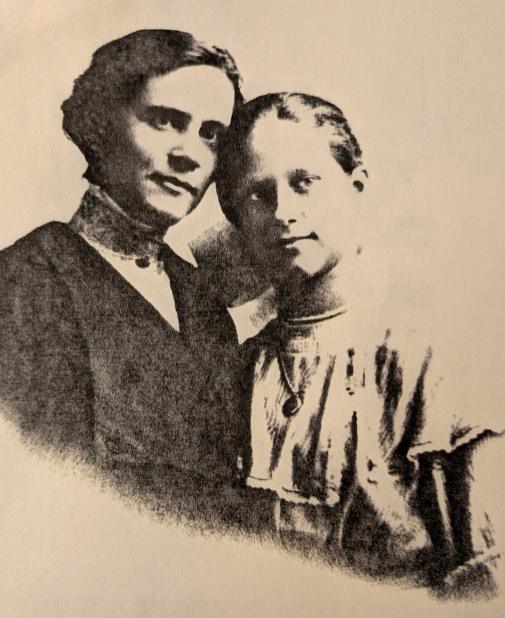
On May 6, 1900, Effie Mae Cummings was born in Chico, California, the only child of Galen Cummings and Ella Stineman Cummings, both schoolteachers there. Soon afterwards, they sought a healthier climate for her tubercular father, first near the ocean in Sonoma County and then in the desert near Barstow where he introduced her to the desert wildflowers. In 1905, her father died, at age 30, in Nevada City, when Effie was not quite five.
Effie and her mother moved to Lincoln and later to downtown Sacramento where her mother taught for the Sacramento City School District. Fearful about Effie’s health, she encouraged outdoor living, which appealed to Effie. Effie’s cousin, Adelaide Tibessart, who lived with them during their high school years, remembers her as a leader, a great student, and someone who liked exploring the outdoors. Effie spent a summer working at Camp Curry in Yosemite National Park and regularly camped in the Sierras.
Her mother steered her towards teaching. In 1917, Effie graduated from Sacramento High School, where she was president of the Biological Honor Society. In 1922, she graduated with a bachelor’s degree in social studies from the University of California, Berkeley. There, she enjoyed learning science and natural history from renowned professors, such as Tracy Storer who co-wrote Sierra Nevada Natural History. After graduation, Effie returned to Sacramento where she taught for seven years at Harkness Elementary School and Sutter Junior High School.
Effie and her mother then moved to Honolulu, where Effie taught for four years at Kalakaua Junior High School while attending the University of Hawaii (Honolulu) where she received a master’s degree in social studies in 1932. Effie loved the tropical vegetation and her Asian neighbors. She traveled to China, Japan and Korea during vacations.
In 1933, William H. Yeaw, an accountant for the Western Pacific Railroad whom Effie had met in Sacramento, visited Hawaii and persuaded her to return to Sacramento. Shortly thereafter, they married. As newlyweds, they purchased a five-acre chicken ranch in Carmichael where they lived for the rest of their lives.

By 1941, the couple had moved into a comfortable, two-story house built at the corner of their acreage at 6001 Park Avenue where it still stands. They had three children, two boys and a girl, all of whom were involved during their lives in working with nature: soil testing for
CalTrans (Galen b.1934), helping manage a Sonoma County apple orchard (Ellen b. 1935) and curating the Sacramento Junior Museum and its zoo exhibits (Edward b.1939).
During World War II, Effie Yeaw taught intermittently while bringing up her children and helping her husband raise chickens and grow varieties of fruits, berries and vegetables. Their home was shared with a small menagerie of orphaned animals including a screech owl named Hooty who lived there for years.
Effie became a charter member of the Carmichael Presbyterian Church. She planted trees on their property and donated a plaque in her mother’s honor with a prayer of St. Francis of Assisi, whose care for God’s creatures was a guiding principle of her own life. In 1948, she returned to full-time teaching. Significantly, she also joined the Sacramento Audubon Society in the late 1940s and officially began conservation work.
Effie switched from teaching high school, to elementary school, which she enjoyed more. She loved the spontaneity of young children and enjoyed working with them. Drawing on her upbringing, she emphasized the importance of introducing nature study into the curriculum, contending the way “to keep modern children in touch with nature” is to take them out in it.
What Effie wanted was to apply her teaching and organizing talents toward giving young children an introduction to the world of nature that would make them curious to learn more, deepen their appreciation of that world, and make them want to protect it as responsible citizens. Her friends remember her as happy and enthusiastic in her work.

From 1952 to 1955, Effie headed the Carmichael Conservation Center, a “little zoo” in an old house at Carmichael Park where she brought her pupils to view adopted animals and learn how to care for them. When the center closed, Effie dreamed of a wilderness area large enough to teach real outdoor education to her students.
Effie then turned her attention to the nearby Deterding Ranch along the lower American River. By 1955, after receiving permission from the Deterding family, Effie began guiding local school children through what she called the Deterding Woods, conducting interpretive nature walks years before the initial American River parkway plan was finalized. Its paths led under towering oaks and other trees, through flower-strewn grasslands, and onto the cobble-strewn flood plain of the river. It was an ideal outdoor classroom.
From birds to heritage oaks, snakes to spawning salmon, children had hundreds of species to observe and examine. “She brought them as close to nature as possible,” said Louis Heinrich, a biology professor at American River College at that time. J. Martin “Mike” Weber, science consultant for the Sacramento County Office of Education, thought Effie was a local pioneer in “the use of the outdoors as an educational tool.”

On her tours, Effie told children stories about animals and birds. A number of those stories were later published by both the county and the American River Natural History Association (ARNHA) as Stories Effie Told. She also shared how the native people living there had used the plants for food and medicine. For thousands of students their first real contact with the natural world was in her company. Her joy was in sharing nature and helping them develop a “sense of wonder.” She made efforts to include tours for children with disabilities, including those with hearing or sight impairment. As time went on, Effie recruited several volunteer tour guides and amateur naturalists to help lead the hikes.
From the mid-50s to the end of the 60s, Effie and those guides and naturalists led school classes, family groups, scouts and others on walks through what eventually became the Nature Study Area (NSA) in Ancil Hoffman Park. From May through August of 1963 alone, she led 45 tours of youth groups, totaling 1,528 youngsters, through that NSA.
Mike Weber believed the germ of the movement that created the American River Parkway--now a well-established 23-mile greenbelt along the river in urban and suburban Sacramento--was conceived in discussions of a group of educators starting in 1950. Effie Yeaw and Louis Heinrich were among the members of the Sacramento County Science Steering Committee, organized by Weber as part of his work as science consultant in the county office of education. Those discussions led to the formation of a conservation group Effie named the “Committee of Concern”, which promoted the designation of at least 50 NSAs in the county. “Effie pushed us to start thinking of a natural area along the American River, and to consider an American River Parkway,” Weber recalled.
By the mid-1950’s, post-World War II suburban expansion and a growing local concern over the loss of open space and natural areas helped spark the parkway campaign in which Effie Yeaw played a leading role. Thousands of citizens were attracted to the recreational benefits and beauty of the American River.
By then, the county had created a department of parks and recreation and had appointed William B. Pond as its director. Pond’s job was to recommend to the county board of supervisors the acquisition, development, design and construction of parks and recreation facilities. Effie went to Pond’s new county office and strongly urged him to start parkland acquisition with the natural area on the Deterding ranch. As time went on, Pond valued that direct approach as Effie and others supported his efforts in the following years.
Seeing the need for organization, Effie along with such leaders as Harold Severaid and James Mullaney were moving forces in founding the Save the American River Association (SARA), and Effie became its first secretary. SARA had evolved from an “ad hoc” protest group into a significant organization with 2,500 life members and 86 cosponsoring organizations. As Fred Gunsky has written: “Organized groups and influential citizens came together. Hiking clubs, fishermen, equestrians, cyclists, rafters and canoeists, seekers of solitude and gregarious picnickers, all perceived a common cause.”
SARA and its allies triggered community interest and kept county officials “on track.” In 1960, the county purchased land from the Deterding family after a home builder had made an offer to put a subdivision there. Luckily, SARA contributions, bond money, and federal matching fund were then available for the county purchase. Under a lease/purchase option agreement, parcel after parcel of the 400-acre ranch became county property.
Later in 1962, when the schematic plan for the development of the entire American River Parkway was placed before the supervisors, “Effie was very effective in a quiet unassuming way” in marshaling public support and convincing the board to adopt the plan, according to Pond. SARA, moved along by Effie’s untiring work as its secretary, continued to create favorable publicity leading to the successful completion of the Parkway Plan.
Effie also was, at various times, conservation chairperson for numerous conservation groups. During her life and posthumously, she received local and national awards for her teaching and her conservation work, including a county resolution from the board of supervisors. Protection and planting of trees were fundamental for her. She and others successfully helped get a county ordinance passed to safeguard her beloved heritage oaks and other venerable trees.
In 1917, Effie’s Biological Honor Society writing in the school yearbook already had a vision that there would be “a complete catalog of all the plant and animal life around Sacramento and vicinity….” In 1963, 46 years later, that vision became a reality: the county office of education published a 200-page book, Natural History Guide for the Sacramento Region, with the strong support of Mike Weber.


Described in the foreword as “the joint project of many persons interested in increasing the knowledge and understanding of the natural environment for young people of the Sacramento area,” it went on to thank “Effie Yeaw, retired teacher, conservationist, guide for thousands of children to the natural areas of the American River, and guiding spirit for this project.” She had written many of the book’s parts and drawn many of the illustrations. Sacramento area schoolteachers and naturalists greatly utilized the book.
Over the years and through numerous editions and revisions, it continued to evolve. By 1975, it was published by the county as a field guide size book with the name The Outdoor World of the Sacramento Region and was widely circulated. ARNHA worked with the county to do two further revisions and, as of 1993, assumed responsibility for its periodic revision and publication.
The Outdoor World, now in its 14th edition, almost 60 years after its first, is a well-known, popular field guide for nature locally. In the preface, co-editors Peggy Kraus Kennedy and Molly Keller wrote: “The book has become an example of the best in community cooperation, bringing together local writers, artists, naturalists, and scientists, all donating their skills and knowledge. [Para] With text and drawings, this book offers fascinating facts about the habitat, behavior, and relationships characterizing 575 species – plants, birds, mammals, reptiles, amphibians, fish, and invertebrates – that live where rivers meet
at the heart of the Central Valley.”
On January 3, 1970, after battling cancer, Effie Yeaw died and was buried in Carmichael at Sierra Hills Memorial Park. Appropriately described as the leading spirit for protection of Sacramento’s native heritage, newspapers uniformly praised her numerous achievements, her industry and her service to the community. Many, including SARA, joined in proposing that the nature center in Ancil Hoffman Park – for which plans but no funding existed – be named in her honor.
Her daughter, Ellen, once shared that Ms. Yeaw would likely have been opposed to naming a center after herself, stating: “[s]he did not like publicity of any kind. When her picture was in the paper she was embarrassed. She always felt she was getting more attention than her
co-workers. She had a lot of people who worked with her,
and she felt it was a group effort.”
Nevertheless, on June 19, 1976, the Effie Yeaw Interpretive Center (later renamed Effie Yeaw Nature Center), opened and was formally dedicated. Since its opening, the nature center over the last 50 years has become a highly regarded and well-loved regional resource, providing outdoor education in a 100-acre natural preserve. Today in the same place where Effie helped guide young children to discover the natural world, over 100,000 people every year continue to experience the same joy of connecting with nature and all the wonders it has to offer.
"We hope to develop the same sort of interpretive program in the nature centers of the American River Parkway as have been developed in the state and national parks through the ranger–naturalist guides.”

Effie Yeaw, 1963 Shown in a typical pose, Mrs. Effie Yeaw plants an oak seedling with the help of a member of [Carmichael] Boy Scout Troop 200. Carmichael Courier, May 20, 1965
Eric Ross is a Co-Vice President of ARNHA and an EYNC volunteer. He would like to thank Rachael Cowan for providing EYNC’s archival materials on Effie Yeaw for use in this article; Brena Seck and Molly Keller for sharing booklets about Effie Yeaw; and, finally, the Yeaw
family for extensive sharing of invaluable materials and photographs of Effie Yeaw, found in the EYNC archives.


Comments